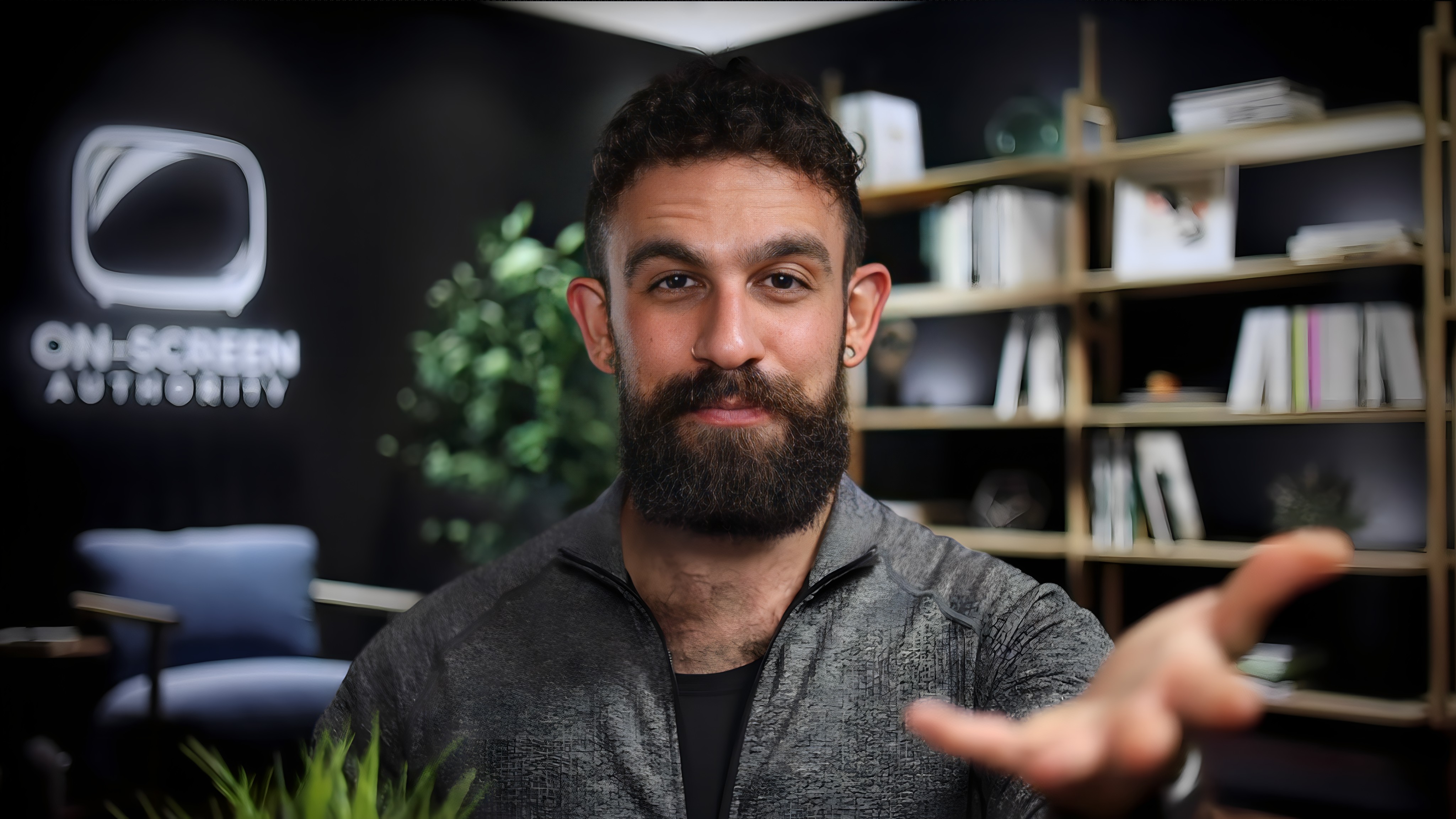
Elevate Your Audio & Video Game with Guest Jason Belisha: From Amateur to Pro
Today, we're diving deep into the world of audio and video production with our special guest, Jason Belisha. Jason is a seasoned entrepreneur and course creator...
Welcome to another exciting episode of the Thinking Big Podcast! Today, we're diving deep into the world of audio and video production with our special guest, Jason Belisha. Jason is a seasoned entrepreneur and course creator with a background in the arts. He's here to share his journey and offer invaluable insights into improving your content creation game, specifically focusing on audio and video setup.
Big Ideas:
-
From Artist to Entrepreneur:
- Jason's unique journey from being a professional drummer and sculptor to a successful course creator.
- How his artistic background fuels his entrepreneurial ventures, emphasizing the importance of creativity in business.
- Key takeaway: Embrace your artistic side to think outside the box and bring innovation to your entrepreneurial efforts.
-
The Power of Effort and Presentation:
- The importance of putting effort into your appearance and presentation when creating content.
- How showing effort can significantly enhance your credibility and authority in the eyes of your audience.
- Key takeaway: Effort and presentation are crucial in establishing trust and authority with your audience.
-
Creating High-Quality Content:
- The significance of high-quality audio and video in content creation.
- Why investing in good lighting and sound equipment can make a huge difference.
- Key takeaway: Quality content is non-negotiable. Good lighting and sound can transform your content from amateur to professional.
-
Jason's Course on Audio and Video Setup:
- Overview of Jason's comprehensive course designed to help entrepreneurs improve their audio and video quality.
- The course includes budget-friendly tips and strategies for setting up a professional-looking and sounding content studio.
- Key takeaway: With the right guidance and tools, you can achieve professional-quality content without breaking the bank.
-
Teleprompters and Authenticity:
- Jason’s advocacy for using teleprompters to maintain eye contact and enhance the authenticity of your presentations.
- Techniques to use teleprompters effectively without sounding robotic.
- Key takeaway: Teleprompters can help you maintain a connection with your audience while ensuring you stay on message.
-
The Role of Lighting and Audio:
- Detailed discussion on the importance of lighting and how it impacts video quality.
- Tips for improving audio quality, including microphone selection and room acoustics.
- Key takeaway: Lighting and audio are foundational to creating engaging and professional content.
-
Entrepreneurial Mindset and Course Creation:
- The entrepreneurial mindset required to create and market successful online courses.
- How to leverage your unique skills and knowledge to help others and create a sustainable income stream.
- Key takeaway: Anyone can create a successful online course with the right mindset and dedication.
Links and Resources:
If you found this episode helpful, don't forget to subscribe, rate, and review the Thinking Big Podcast on your favorite platform. Share this episode with fellow entrepreneurs who could benefit from Jason's expertise in audio and video production. Let's all think big and create amazing content together!
Connect with Sean Osborn at Thinking Big Coaching
https://www.thinkingbigcoaching.com
https://www.instagram.com/thinkingbigcoaching/
https://www.facebook.com/thinkingbigcoaching/
0:00 Thinking big nation, I want to welcome Jason to the show today. Welcome to the show, Jason. Thank you for having me on. One of the reasons I wanted to get you on is I like getting people who do other coursework, that do courses and do that are entrepreneurs like me, uh, and being able to really talk and really learn things from each other. But, uh, before we really get into that, I wanted to, one of the other things I want you to do is possibly critique. My audio video because that's everyone here. That's what we're here for. We're here for his audio video He is a genius when it comes to getting people set up for doing coursework for doing really anything Online, especially for me, especially coursework is where the stuff that you do really comes in Yeah, uh, well if you want a private critique that's gonna have to come later I will not I wouldn't roast you on your own show, but you're looking amazing I see you I hear you looks like you put effort into your appearance, which makes me feel better about Being with you honestly, that's what it's all about.
1:00 Just showing effort. Showing effort. And, and I do think there is a bit, uh, we'll go before we get into that. I wanted to talk a little bit about your background and, and this is coming into it from being an entrepreneur and from creating courses, but you come from an artistic background. And I think from an entrepreneur standpoint, especially doing courses or anything like that, but from an entrepreneur, entrepreneur standpoint. I think it is very big to come from that sort of a background, an artistic background. I think there is a level of, I don't know, imagination or a level of being able to go outside the box, scribble outside the box that you wouldn't normally have. I think if you don't have some sort of an artistic background, then again, I think almost, I think a lot of entrepreneurs are like that.
1:46 That's kind of why I think why we're entrepreneurs, but what is your, what is your background? How did you get into doing like some of the coursework that you do? I love that you brought this up because inherently, I think. Everyone's an artist, especially entrepreneurs. They don't maybe label themselves as that or realize that, but they are. And I do think artists would make great entrepreneurs if they would just change their mindset. So, uh, the story of how I did that, I guess, was it's hard to know how far back to go, but basically I have a degree in sculpture. I've been a professional drummer my whole life. So around age 27, Um, I was doing voiceovers at home.
2:27 That was my main method of income. Uh, also photography. So uh, around that time, my band that I was in signed a record deal. It was actually kind of a pretty big record deal. And I was thinking like, okay, it's, it's a good opportunity, but it doesn't pay a lot. I need to make some money on the side. And, uh, the only option I could think of was like, I've heard about this online course thing where I can just basically teach people what I do through a series of videos. So it's really scalable. I can make it affordable and just like run ads or guide traffic or just, I just learn everything I can about that. So it took me about six months to make my first launch of my first voiceover course and it, you know, it did what it did.
3:10 And uh, there was a lot of running back and forth trying to like scale it and make it actually work. And it wasn't until I. Really bought like a very, very expensive coaching program that got me to the numbers that I never had imagined for myself before. So it was kind of a gun to my head, kind of like a time limit where like, if you don't get this passive income thing working, you're not touring with your band. So I needed that. And ironically, right when it was, you know, the band was ready to tour and everything, that's when COVID came up. And now I'm just at that point, I was just stuck with a passive income stream and nowhere to go. So I just doubled down on the coursework and entrepreneurship and changed my network and actually grew more into this than that.
3:55 That's amazing. Again, most of the people that are listening right now with this, uh, they're entrepreneurs, they're people who are creating courses, they're people who are, who are doing that. And I think that every single person in this world has a gift or has something that they can teach somebody else. If as long as you're two steps or one step ahead of somebody, you can help somebody else out and you can help them. Instead of it taking a year, take two months instead of taking 10 years, take a year. So to me, it's our job as human beings to literally help people out and help people move further faster with what we know and what we do. We don't have to be some huge company to create something that helps somebody out.
4:39 So hats off to you. Thank you. And I completely agree. It's like the way I like to say what you just said is if you're watching 5 percent or 1 percent ahead of 99 percent of people. You can sell 100 info product to 100, 000 people and become a millionaire. It's like you only need to be slightly ahead and you don't need authority to do that. You just assume authority by, by having good information and knowing in your heart that this is really good. This will help. This is not BS. This is not going to hurt people. This is going to help people.
5:19 By providing that to us, it's kind of your duty, you know, as course creators, as, as mentors, like we're kind of like. The elders and scribes of our generation of this century of this millennia, and they had a job and we have the same job, you know, it's kind of oral tradition. It's kind of just like that. So just helping people get ahead. Yeah. Yeah. And if we do it and it really doesn't take that much. So again, I, when I'm working with some of my course creators and some of the people that I work with, it's like people until they sit down and look at numbers, they don't really understand is like, if you sell to just 2000 people. A low ticket, like a 500 ticket item. People don't realize they go, Oh, 2, 000 at 500, that's, you know, that's a million dollars.
6:02 People, 2, 000 people at just a 500, which is, you know, it's not a high ticket item. It's not a, you know, extremely low ticket item. It's average, you know, average ticket for kind of a course, you know, it's yeah, mid ticket stuff. It really adds up very quickly. It doesn't take a lot to, uh, to really grow your business and to really be able to do this as a living or as a, as a really good side hustle while you're doing other things. I mean, if you get good feedback initially at low scale and people are enjoying your product and your refund rate is low and people seem to be getting actual value from it. It'll work at a higher scale. You just find diff different ways to run traffic to it and yeah, you'll make a million bucks as someone who's never done anything like that before.
6:47 You don't need a giant infrastructure, you don't need a giant team. It's pretty available. Yeah. To all of us. Yeah. And doing courses, so looking at courses themselves and there, I think there's a time. If we're, if we're going to, if we're going to go through this and I'm going to build a course and I'm going to, you know, take the time to do this, I want to really help people out. A lot of people will come in and say, Oh, you can, you know, you can do it on your, your iPhone. You can, you know, you can do it on one of these little, you know, I've got this little, uh, Osmo pocket three, which is a fantastic thing for a run and shoot. And just, you know, I took this tutorial, you know, we were just talking, I took this to Turkey with a wireless microphone and that's what I used on the road. Yeah.
7:27 But if we're building courses and we're building something that we really, we've got to show some level of authority, we've got to show we've got, and it's not just the equipment that we have. It's how we show up. It's how you present yourself. But there is a level, I think, a quality of expectation of people. Now, if they're going to spend 100 on a course, they don't want to. I mean, I hate to say this and tell me if I'm wrong, but they don't want to see someone that's just sitting there with a bad And it's like, they're not going to, to me, they're either not going to sell or they're not going to have happy customers because it just doesn't relay the, the, the message of what they're doing. I think, which metaphor should I use?
8:08 It's like, if you like order a meal, why do we care about presentation points? You know, when you're presenting your information to people or you're selling God, if you're selling to people, it's like, if you're not going to take the time to put your resources together and present yourself to me in a deliberate and meaningful way, why should I meet you halfway? You know, it's, it's about looking resourceful, looking like you have your shit together. So good. That you can afford this outward appearance, you can afford to, to at least hire someone or find some resource to make this work. Because again, like another metaphor I use is like, okay, if I invite you into my house and you know, it's, I tell you to make yourself comfortable and like, Everything's kind of just crappy.
8:57 It's hard to settle in. It's distracting. It's not a good experience you're giving people. So that's why it's, it's, it's about not, yes, not being distracting, also looking authoritative. It's kind of about all of that. Uh, and I mean, look, if you really held me down, I'd be like, yes, sure. You can shoot with your iPhone. You can. What about the pride you take in what you do? Doesn't doesn't that make a difference to you? If this one, if you're going to record it once for the money, this one's for the money. This one's for the big audience. I don't ever want to do it again. I want to script it. I want it on a teleprompter. I want to say everything I mean to say, and I want to just emblazon it in this beautiful image.
9:40 Wouldn't you just want to do it the best you possibly can and look amazing? I would. Yeah. I'm just speaking for myself. And yeah. And Oh, absolutely. And a lot of it. So I get comments from people sometimes it's like, well, I would rather be authentic than to have a nice setup. And I'm like, you can be authentic. And look professional at the same time being authentic has nothing to do with, with, uh, you know, with, with what you record on, you can be authentic and both again, to me, there's a time for the, the running gun shoot stuff shorts. If I'm out, I'm out doing little shorts doing things, but I'm not going to want to record like a course on this.
10:20 It's just not. It really just doesn't show what I want to portray as, as, as me, as my company. If you're asking people to sit there for 15 minutes, 30 minutes, an hour on a webinar or for eight, 10, 12 hours on your course, and you're going to ask them to look at you with your screeching audio, just it's about respect. I think. And, and speaking of authenticity, if I were being authentic. This is the image of me that I want you to see. This is the, this is how I see myself in my mind. I, I feel like a professional. I feel like I really deserve to look this way. That's authentic. I don't have to, I don't have to dumb down my quality to make it okay to make you feel better or relatable.
11:06 I just don't buy it. , I truly think that that is a, again, you don't have to have. And you don't have to have really expensive equipment. I mean, you can have just decent, just some decent level of stuff to get a very good quality. And again, it's how you show up. It's how you, how you come on screen, how you, how you do things that, you know, that really portrays, but there is a way to do it. To me, most effectively. People asking me how I, you know, how I set up my little studio, I do this. I am the wrong person to ask because one, I'm a tech geek. So it's like I buy shit just to buy shit. I've got 25 different mics around here. I've got, you know, seven different cameras. Don't ask me because I just buy shit. We would be friends.
11:48 Yeah. I'm just a tech gadget. I love doing things. So it's like, you know, I've got, you know, microphones, you know, shotgun microphones for when I'm doing videos. I've got, you know, microphones for podcasting I've got, but you don't need all of that. But don't ask me because I'll say, yeah, you need, you need five different cameras. You need, and you just really don't, you know, and I think some of the stuff that I've seen with you is you, you're teaching people with one of your courses. Again, we, we got into that. You are a course creator. You know, this is kind of what you do. You're an entrepreneur, a course creator, and one of your courses is teaching people how to use audio and video. To me in the, in the best possible way, in the, in the most efficient way. Uh, and, and again, that's why I really wanted to bring you on here.
12:28 It's because I don't know these things. I know my audience really wants to know, you know, what are some of the things that we can do as course, as course creators, or even just entrepreneurs doing online videos for, for things like ads or, or anything that we want, or just our online presence. What are some of the things that we need to look at or we need to do to look a little bit better. But without maybe breaking, you know, breaking the bank, right? So a little backtrack on how I got started in this. I know my story left off at voiceover course. So since I was hanging out with other entrepreneurs, people who make courses, I was showing them my ads, my webinar. And they're like, how do you look like professional like that?
13:09 Did you hire a video crew? I'm like, no, it's just stuff I have at home. I'm a photographer. I do voiceovers. Like I know audio video. They're like, yeah. You got to show me how to do that. And the light bulb went off. I'm like, okay, okay. Yes. That's the entrepreneur, right? Okay. Oh, here's a problem. This has not different newer. Yeah. Okay. He smart, wealthy people or just smart, resourceful people want to learn this skill. And that's the cool thing about course creation. It can be a novel idea just by virtue of who it's for, because there are other filmmaking course courses all over YouTube and ads and stuff there for filmmakers. But entrepreneurs don't want like 75 percent of the information in that course.
13:51 They want something that's tailored to them. So I knew that I had to create the course that is the most efficient way to film yourself. There are budget options, so it can be just on an iPhone. And again, to answer your question, what's one of the most important things you can do right away? Light. Light makes a bigger difference than the camera. If you got your lighting correct, you would make a bigger impact on an iPhone than if you got a more expensive camera and had the same lighting. If that makes sense. Oh yeah. The camera only sees what you put in front of it. It only sees light and shade and color. So your light will affect what light and shade and color is presented to the camera sensor.
14:34 And that's it can't lie. So if you just get yourself lit better, any camera, even your phone will see you clearer. So that's one thing. And in my course, I show how to manipulate your lighting for an iPhone, uh, for a regular camera. And I wouldn't exceed 1, 000 on a camera body. This is not just because you have money doesn't mean you need to blow it. So, you know, there, there are boundaries around how we spend money. And it will get us the most bang for the buck, not only for the quality, but for the workflow. There's a specific reason I choose specific microphones because they have very unique inputs and outputs that allow it to be wireless and not require an audio mixer and other advantages like that.
15:16 Right. So the lighting as well, you can plug them in with a smart sockets and have them go on your Alexa Google system. So their voice command now. So that stuff is all over the place. We don't even use those big soft boxes because I was thinking, what would a busy entrepreneur want to build and use every day? So I built that. And that's genius. And it's, and had you, had I known about you, like maybe three years ago, I would have saved probably 50, 000. I'm sure it's like right now I'm going through, I think it's a Canon R five. I've got, that's just all this. Yeah. Stuff I don't need, but it's like, but again, I'm a tech geek and I like toys, so it's toys.
15:57 So when people ask me, what do you use? I'm like, you don't want to know. It's like, this is not the, this is not the right setup for, for most people. And again, it's just cause I'm a, I'm a. That's just what I do. I like doing that, but I would not go out and buy my setup for what I do because it's just not, it's not practical for, for that. It's practical for a hobby. Sure. But it's not practical for someone going in and wanting to record, uh, you know, record a video or something. Yeah. I mean, if you really wanted to save time and money, you wouldn't do it the way you did it. You would want something streamlined. That's just already figured out for you. Just pick from this menu. Yeah. Yep. No, that's. And that's great. And so what do you think about, like, for instance, right now I'm going through a teleprompter now I'm not someone like when I do my courses, I'm not someone who likes to.
16:43 Most of the time read script, like if I'm doing a course, I'll have like the, like my, uh, uh, the, the PowerPoint up there and I'll just kind of, you know, I'll talk from that. Sometimes it'll be from script, but I use it mainly for like this podcast so I can look directly at you while I'm doing the interview and I'm not looking down. I'm not looking up. I'm looking right at you. So that's mainly what I use a teleprompter for. What are your thoughts on like teleprompters and things like that for people to, to use? I am such an advocate of teleprompters and I get so much backlash because people are like, no, it's going to make me sound like a robot. I don't want to do that. And I'm like, you haven't seen the way I use a teleprompter. And first of all, I didn't know, I don't know where you found this eye contact feature or strategy.
17:28 It's something I came upon myself, but I think it's kind of like, like fire was discovered kind of in multiple places and I'm seeing it more frequently now. So I mean, what a hack, isn't it? It's great because I'm doing the same thing so I can look right at you and like the rapport is there. I feel like I'm in the room with you. Yeah. That's much. And that's the thing. So it's like when, when I'm doing interviews, it's like, I don't want to be looking at a different screen and saying, Hey, how are you doing? It's like, you just don't, half of our communication is by our gestures, by our nonverbal facial. It's all nonverbal. And it's like, so it's very important to do that. Yeah. So, and there's a lot of different ways to do it too. Totally. Totally. Totally. Totally. And, and I think a, first of all, when you look at yourself with new lighting, You'll already feel better.
18:09 Another thing that will make you perform better is the teleprompter, but not in the traditional sense. Most teleprompters we're used to seeing the words just constantly scroll and you can't seem to get ahead of it. You're behind it. You're, you're, you just, you people fall into this sort of trance and they're just, you can see their eyes kind of going around and they, it sucks. Of course, it's a bad experience for you. Bad for them. But what I use is a special app that is voice dictated. So it only scrolls when you speak. And if you stop, it stops. You can breathe, you can drink, you can go off script and come back. And that does 90 percent for most people. Just with that, they immediately. Um, turn on when they, when they see the script instead of turn off.
18:50 So the other step to that is since it's voice dictated, it needs to be able to hear you. So usually your camera and your iPad is usually an iPad is running it. It's too far away from you and your iPad can't hear you. So we have a way. of wirelessly linking this microphone to not only your camera, but splitting the signal to also go into your iPad. So that controls that teleprompter device perfectly efficiently with no mistakes. So that's, that's why a man like I took forever to figure out this shit for people. So they don't have to think about it. Yeah. Me, no, I'm going through like nine different mixers and hooking shit up left and right. And it's like, yeah, it's not, And more power to you, dude.
19:32 I was like that, too. You should have seen my room when I was making the course, testing all this stuff. Just like that. And so the other thing that I always, especially not, not only for content, like for online content and, and courses and stuff, but especially for like podcasts, uh, any audio to me, audio is as important, if not more important to the video, because I will, I noticed notice myself, if I'm watching something. It might have a bad video quality and I'll put up with it and I'll watch it and listen to it. But if it's got poor audio, I turn that off almost immediately. And it's like, that is another big thing that people don't realize.
20:14 And again, the stuff that you talk about in your course is like, audio is a big, a big deal. Audio really is a big deal. And interestingly, the way I came at my creative freelance career was voiceover first. So I'm so. Tuned in to voices. It's like I, I listened to the voice before I listened to the words in a way, if that makes sense. And I'm so used to hearing my own voice being recorded and manipulating that sound with EQ and noise gates and compressors and like getting, getting sound to work. So I know when I get it right and it seems to make its way directly to my heart and the message is, is.
21:02 Unfurled from that, when there's good audio with no distractions, that's the thing. When you like good audio, you shouldn't even notice, right? Bad audio distracts. So when the audio is perfect, there's no distraction. There's no veil between the message and your heart, your mind. So that's when I know, and people know, everyone knows, everyone knows what good and bad audio is. If you can't tell, it's good. And people will complain if you have bad audio, but they will not say anything if you have great audio. It's because they don't notice it. They don't, they don't see it. And there's so much, even again, video and audio, but there's so much with like microphones. I mean, with you doing voiceover. There's just so many things that I'm sure you go over.
21:45 I know some of your course, but that you go over in your course, but like your room, how you set your room up, how you, you know, cause you get in some rooms with some mics and it'll sound like you're in an echo chamber. Uh, you get in, you know, so you have to be able to get with a pro like you that knows what, cause there, there might be a mic that sounds pretty good. Perfect. You might be on one right now that sounds absolutely fantastic. But if I took your same mic and I brought it into my room, it might sound like crap with my voice. I mean, it's just so it's, it's, yeah, you, you've got to, and unless you're going to spend like me, spend, waste, invest, however you want to look at it, lots of money with, with microphones, then it's, it's very hard to, you know, you, you, I would have been so much better off if I would have just paid someone to come in and say, Hey, set this up for me.
22:29 Look at my room. What do I need? Uh, so do you go into like any of, uh, like acoustics for a room or anything like that? I know you do. So what? One of the things that I've noticed with every one of your clients is the lighting and the backdrop and the sound is all extremely clear and extremely good. You've got the, you know, the vignette in the background you've got, but everyone that I've seen you, your before and afters has a very, very good look. So I'm assuming you, you've worked with people on their room as well. Yeah. Um, actually it doesn't take much, just a few strategic moves. And again, I know. What a reasonable and resourceful person would do what they would buy what they would do.
23:12 So I wouldn't ask anyone to glue or tape or drill anything into their walls. That's first of all. Um, honestly, what makes some of the biggest difference is just a rug. Just a really cheap rug. Thick shaggy rug will do a lot. Um, also your mic choice. So most people, um, they wind up with like that blue Yeti and I don't know how it got so, I don't know how it got so popular. I know dude. Cause like, honestly, in the right conditions, it sounds fine, but, uh, it is a hyper or not a hyper, it's a regular super cardioid mic. So that will pick up. Audio from 180 degrees around the grill. And so what do you think that's going to do? It's going to hit again, a pickup reverb and things from all over the place versus something like you have a dynamic mic or mine, a shotgun mic, it's more unidirectional.
23:58 So that just your microphone choice. And like, I don't know, dude, lay a rug on the ground. Like it it's pretty common sense, simple stuff. Um, if you can get with it and understand the behavior of light and sound to a very simple, small extent, it's You'll make some, a lot smarter choices., I use this, this sure mic right here. Not because I, I don't necessarily like the mic, but it's just convenient. It's easy. Uh, you know, again, I've got, you know, a nice shotgun mic up here that I use, but I only use it for video when I don't want it to be when I don't want it to be on screen, but that's not necessarily the right thing to, I mean, I've, I've noticed some of your, your videos where a lot of people are using the shotgun mic that mic actually sounds way better than this.
24:39 Sure. The shers again, that's, uh, but almost every podcaster you see has one of these damn, damn shers. And it's really not that great of a microphone. I mean, it's, it's decent, but it's not, yeah, it's not really a great microphone. So would, would like if, so you're on your client, what are two or three things that you see right now? Move to my, uh, You know, move to my shotgun mic, change my lighting, change my background. What are, what are a few things that just looking at this saying, Sean, this is, you know, you could do some improvement here. Okay. Is your question about outer appearance or efficiency? Outer appearance. Outer appearance. I'm never efficient.
25:19 Well, okay. We'll get to that another time then. That's, that's just a private call between you and me. First of all, I think your 7b Um, I think it sounds great. I think that is actually one of the best sounding mics on the market. Um, what's that over your head? The 416? Yeah, it's a 416. Okay. Which is a fantastic mic. I love the mic. Yeah, actually that's the second most common mic used in voiceover. So it sounds great on the voice. Um, I actually do it wrong. People yell at me because I have my shotgun. on screen in front of me. And it's actually completely wireless. So that's one thing. And it's being hidden by this plant. So even if you did give me a dig for having the mic on screen, well, you can't even see it. So your mic, I think any mic that's literally any microphone at all will sound 10 times better if you just get it closer to your mouth.
26:06 Um, the seven B I can tell that's probably a good distance from you. You want it two to four inches, maybe two to three inches from the corner of your mouth. And I see you have it placed off to the side. That's exactly right. So we don't get plosives and annoying stuff about your image. If I can take a good look, I think your lighting is a little bit undecided. It's not very deliberate. I think your key light is above you to your left slightly. Correct? Yeah. I think. Do you have a fill light operating on you? Uh, yeah. So I have an above light and then I, I've got two, uh, two lights coming in. I'd like to see what happens if you kill the fill light on your left side.
26:50 Can you do that right now? On my left side? Yeah. Oh, absolutely. That's what the, so if I go here, I can, let me pull this up. Oop. I killed both of them. I do want to see them at some point. Yeah. For some reason they're tied together. Don't know why Amarand system? Uh, no. Okay. No. So these are just little Elgato lights. Oh, the Elgato. Okay. So it's over wifi. Amarand is Bluetooth. Actually. What you have here is definitely more dramatic. You just turned off your, so you have three lights on you. Yes. Above. And then two. So I can, I can adjust, you know, the brightness.
27:30 So your, your main key light is directly above you. Yes. So I've got one light directly above me. I see that's butterfly style. So I love butterfly lighting. It's just sometimes kind of a pain because you have to rig something. Yeah. Yeah. Yeah. overhead versus off to the side. Um, and like a regular boom stand would do that. But, I mean, it's in the course, but I wouldn't rec, I wouldn't ask anyone to do that standard. Um, right. So your shadows, if you killed the fill lights, your shadows are going to wind up kind of under your cheek. Under your chin on both sides evenly because I love that butterfly look. It's dramatic, really pulls all the attention onto you and centers it in the middle of the screen. It's beautiful. So I think actually what I'd like to see is just both fill lights on, but very low, maybe like 10 percent and it's all relative.
28:18 So I don't know what 10 percent looks like, but. Yeah. So I can do, uh. Cause I think the issue you had before is you were filling all the shadows, but shadows show all the detail and topography. They show the shape of your face. See that already already. I think you're, I think you want a low key background. I don't think you want that to be too bright. Right. If I'm not mistaken. Right. So I think the point at where it's at now is cool. Otherwise I would say, raise your ISO. And maybe, maybe keep your key light where it's at. I think you look balanced. I think you overall look a little low key. I think your key light could come up a little bit if you wanted to pop off your background a bit.?
28:59 No, see that's what I might see this I might actually end up getting some new toys out of this. Oh, oh, no. Oh, no. I'd have to take it take a weekend Yeah mess around over there, okay, so Yeah, get a varipole and you would stick that Like, it's kind of like, you know, the shower curtain rods that just kind of twist in the walls. So that would run across your entire ceiling and then you can put a hair light behind you. I wouldn't recommend it off to the side, like with a key light. You see how my edge light. It's kind of off to the side, right? Since you have butterfly lighting in front of you, I recommend putting it right behind you. So it shines on the back of your head and both of your shoulders and just perfectly trims you off the background. That would make you look like nice.
29:40 You'd look like super saying you'd look like superhero. It would really pop you off, trim you out. See this trims me out. Wow. Wow. It would get you everywhere. Wow. I think that makes perfect sense. I think you should also kind of make sense. Sean, I want you closer to me. I think this is a lot more personable. Also your background, what, what F stop are you at? A 4.5. Yeah. 4.5. I think I'm on like a 4.5 and the lens goes down to like a 2.8, so I could really get it down to, uh, which too much. I mean, that's like, no, almost like a blurred background. I'm on 1.8. Don't you think that'd be Wow. Because I have a, a, you have a Zoom lens right? Yeah. I'd get a prime, figure out your favorite focal length, and then buy the prime version of it. And just do, do the prime version of it.
30:21 I'm going to have to, I've got a few prime lenses too. I'll have to play around with that. See, this is, this is fantastic. And so when you're, when you're working with people and you're, you're doing this, you literally would have saved me hours. Fiddle battling around wasting time trying to do different lights and not, but here's the thing, you know, what to look for. I would have never even looked at, Oh, maybe I should put a light behind me showing down to do the shoulders, do the, do the hair. I would have never even looked at that. So it's not even just fiddle battling around for hours, but you know where to, you know, where to tap the hammer to get the, to get the fix. Because it's a puzzle, dude. I like puzzles and it's visual. And I can, I, I mean, it.
31:03 It's not only that I like to solve this puzzle for one person, I also like systems. Like, I'm an artist, I'm a creative, I channel, I splatterpaint, but sometimes I architect. So the solution that I came up with is something that works for everyone. And there are contingencies in there. Well, this doesn't work for me. My room is not that big and this and that I considered, dude, I considered everything. I know every FAQ I've gotten at all. I've over a thousand members. I've heard all the questions. We have all the results. So that's why I enjoyed creating a system that works for everyone. It's something that's like, I like to say I took a creative process and turned it into a standardized process.
31:45 Because as much as I love loose ends and open borders and just kind of playing around with paints, I also like structure and I like being able to produce repeatable results for people. I'd like two rains happening at the same time. It's kind of fun. And I think that's, you know, one of the things you said is very important when you find someone who does good course. So if you're listening right now and you're looking at doing a course, you're looking at producing something, uh, like what he's done, know what you're doing. It's like you've spent so much time on your course and doing that and prepping for it and making sure that the right stuff is in there, that that is what saves people time. That is what helps people out is you knowing.
32:27 Down to every nut and bolt what the best solution is for any situation So that's where the value comes from on any of these courses is when you can really if you get if you get a course With someone that is very reputable that is good You will no doubt save tons of time and money because you've done the work Thank you for recognizing and highlighting that because I don't think I've ever said this on record because it's thankless and no one really cares, but I spent nine months making that course full time. I spent three months just scripting the information, 90, 000 words, which is like a book and a half and the table of contents and making sure that the information is presented in the right order in the right way.
33:12 And every sentence is such a good sentence that you only need to hear it once in a five minute video. Thank you. I understand. Now move on. I took nine months to make a three day course for you. And it shows, but here's the thing. Here's the thing that shows. So not only does your course have longevity, but everyone I've seen, And people listening right now, we're going to have everything in the show notes for you to go up there. But it's, uh, onscreen authority. com and you've got some free, you know, you've got a free thing for a little tutorial for people to, to go through as well. We'll again, we'll put all these links in the show notes, but it shows the work that you put in absolutely shows because you'll see the people that are on there that have done your course that have done what you've recommended.
33:58 It is literally like amateur hour. Compared to pro hour. I mean, you can tell immediately that they have really upped their game for their courses, for their online content. And I don't think they spent that much time. I mean, I don't, you've, you've got the system down to where they can do that within a week. You know, they can do the, get the stuff, do the week, maybe set, set a few things up, but it's, you've got it down to where you can help people very quickly get to looking professional. I think if you meet me in the middle and you watch everything and you're decently intelligent and can follow instructions, like our friend Doug, Doug did it in three days. Like I said, three work days and he doesn't understand cameras, still doesn't understand cameras and he looks like a boss because I created that system and he, he tucked his ego away and went through my system and then came out the other end.
34:49 with exactly the result that I promised. And I love to see that. I love, like a, like a chef loves watching people eat their meals. I love watching people go through my process and coming out and saying, Hey, you were right. I'm like, I know., That's the beautiful thing of why I like having other creators on the podcast is because it is, it's a, for most of us that do these courses. Sure. We want to make money. Sure. That's, that's, we're in business to make money. There are children at the same time. It's like they are. They are. Our courses are a part of us. It's not something you didn't just go throw this together to go make some money. This is part of you. Part of what's taken you years and years to learn and understand.
35:30 It's part of you. It's not, it's not just some whimsical thing that you said, Hey, yeah, I'm going to do this course. You know what I tell people now I'm not a businessman. I'm an artist. It doesn't make a difference. I'm just going to do work. I'm going to do great work. Yeah, that's all I got. And you're creating, you're creating. So to me, if you're creating and you're being creative, you're not just creating the same shit that someone else has done, but you're being creative. That is being, to me, as being an artist, you're not copying other people's art. You're being creative. You're looking at that and you're being, you know, that creativity is what shows that that's really what makes all of our stuff different is the creativity that we use. And again, coming from an artist background, it's absolutely. Yeah.
36:14 I think a lot of artists will tell you, it's like, I'm not even making the work, man. I'm just stepping aside and doing my best to channel what needs to be there. It's like when Michelangelo set David free from the marble, right? He was already there and he just got out of the way. Not to compare myself to Michelangelo, but same, same kind of concept. I just, I just want to make something great and get myself out of the way And I truly want to thank you, Jason, for coming on the show to give us, helping me. You know, increase my, you know, increase the way I'm going to look the way I'm going to show up. Thank you for your great questions and, and highlighting me and helping me make some discoveries about myself too.
36:55 This has been a great experience. Thank you so much for having me on.